
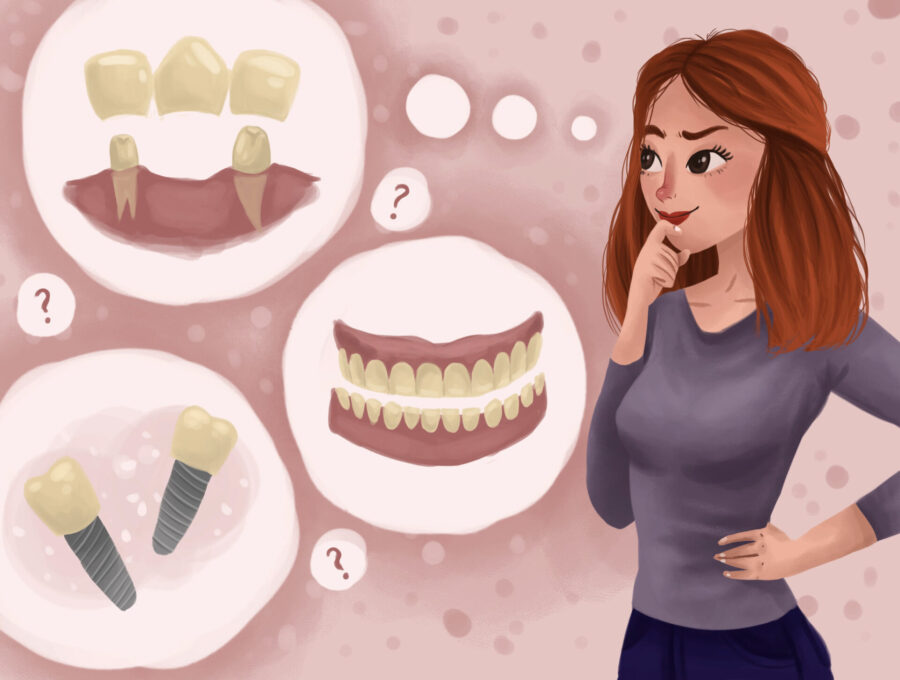
When you’re dealing with a missing tooth, most people just want things to feel normal again. Eating shouldn’t take extra thought, and you shouldn’t have to think about where you’re chewing or how your smile looks from certain angles. At first, it’s about fixing the gap. But once you start looking into your options, the conversation naturally shifts a bit. It becomes less about just replacing the tooth and more about choosing something that’s actually going to hold up over time.
That’s where dental implants and bridges usually come into the picture. Both can work well, and both are commonly used. The difference tends to show up later—how they feel day to day, how they affect the teeth around them, and how often they need attention down the road.
How Dental Implants and Bridges Work
Even though both options solve the same problem, they go about it in very different ways.
A dental bridge uses the teeth next to the space for support. Those teeth are shaped so a connected restoration can sit over them and fill in the gap. It’s been a dependable option for a long time, and in many cases, it still works well. The main thing to keep in mind is that it relies on those neighboring teeth to do part of the job.
An implant works more on its own. A small post is placed into the bone where the tooth used to be, and once it heals, a crown is attached on top. Because it stands independently, it doesn’t involve the teeth next to it, which changes how everything functions over time.
Upfront Cost Compared to Long-Term Value
This is usually where people pause and take a closer look. A bridge tends to cost less upfront and can often be completed more quickly, which makes it a practical option if you’re trying to address the issue without a larger initial investment. For some patients, that alone makes it the right choice.
Implants take more time and involve a higher starting cost, since there are multiple steps involved. But when you look at it over a longer stretch of time, the picture can shift. Bridges may need to be replaced at some point, especially if the supporting teeth run into issues. Implants are built to last much longer, so for many patients, it ends up feeling more like a long-term solution rather than something that may need to be redone.
What Happens to the Teeth Next to the Gap
This part doesn’t always get as much attention at first, but it tends to matter more over time.
With a bridge, the teeth on either side of the gap need to be adjusted so the restoration can fit properly. Even if those teeth are healthy, some structure has to be removed to support the bridge. Over time, they’re also taking on more responsibility, which can add a bit of extra wear.
With an implant, those neighboring teeth are left alone. Nothing is placed on them or attached to them, so they continue functioning the way they always have. For patients who want to keep as much of their natural tooth structure as possible, this often carries some weight in the decision.
Bone Health and Changes Over Time
After a tooth is lost, the bone in that area doesn’t get the same use it used to. That change isn’t immediate, but over time, the bone can begin to shrink slightly because it’s no longer being stimulated. A bridge doesn’t interact with that area below the gums, so it doesn’t maintain the bone level.
However, because an implant sits in the bone, it helps maintain that stimulation in a way that’s closer to a natural tooth. Over the years, that can help preserve the shape of the area and prevent some of the gradual changes that can happen after tooth loss.
Daily Comfort and How They Feel
From a day-to-day standpoint, both options are designed to let you eat and function normally, but there are some small differences patients tend to notice.
Bridges feel stable, but since they’re connected across multiple teeth, they can feel a little different at first. Cleaning underneath them also takes a bit of extra attention, since you’re working around the structure rather than between individual teeth.
Implants tend to feel more like your natural teeth because they stand on their own. You brush and floss them the same way you would everything else, and there’s nothing connecting them to neighboring teeth. For a lot of patients, that familiarity makes things feel more straightforward over time.
Maintenance and How Long They Last
Both options can last for many years, but they hold up in slightly different ways.
A bridge depends on the teeth supporting it. If those teeth stay healthy, the bridge can last a long time. If something changes—like decay or weakening—it may need to be replaced as a whole.
Implants are built with longevity in mind. The crown on top may eventually need to be replaced, but the implant itself can last for decades with proper care. That’s often the point where patients start thinking about it less as a short-term fix and more as something they won’t have to revisit often.
Choosing What Makes the Most Sense for You
There isn’t a single right answer here, and that’s usually part of the conversation.
Some patients prefer a bridge because it’s quicker and doesn’t involve surgery. Others feel more comfortable choosing an implant because it’s independent and tends to hold up longer without involving other teeth.
It really comes down to your priorities—how you want it to function, how you feel about the timeline, and what makes sense for you long term. In some cases, one option may clearly stand out. In others, both are reasonable, and it’s about choosing what fits best.
Dental Implants and Bridges in Long Island City at Queensboro Plaza Dental Care
At Queensboro Plaza Dental Care in Long Island City, NY, Dr. Michael Nguyen and Dr. Daniel Barayev take the time to walk through both options in a way that feels clear and practical. The goal isn’t just to replace a missing tooth—it’s to make sure whatever you choose continues to work well for you over time.
If you’ve been weighing implants versus a bridge, it’s worth bringing it up at your next visit. A comprehensive dental exam gives you a chance to look at your specific situation and talk through what each option would look like, so you can make a decision that feels comfortable now and still makes sense years from now.
Contact UsImage from Authority Dental under CC 2.0




