
If you’ve ever had a dental impression taken the old way, there’s a good chance you remember it.
That tray filled with thick material, the pressure as it sets, and the feeling of having to sit still while hoping it doesn’t trigger your gag reflex. It worked, but it wasn’t exactly comfortable, and it wasn’t always precise the first time around.
That’s the experience digital impressions are replacing.
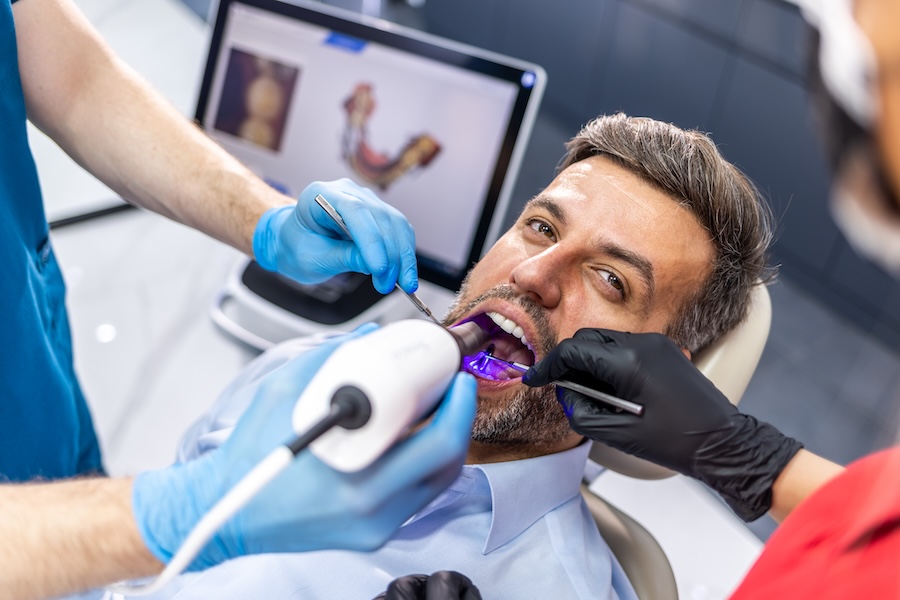
Instead of using putty-like materials, digital impressions use a small handheld scanner to create a detailed 3D image of your teeth. It changes how crowns and clear aligners are made, but it also changes what the appointment feels like from your side of the chair.
What Digital Impressions Actually Are
Digital impressions use a scanning device to capture a highly detailed image of your teeth and gums.
The scanner moves over your teeth and builds a 3D model on a screen in real time. You can actually see your teeth as they’re being captured, which helps make the process feel more transparent. If something needs to be adjusted, it can be corrected right away instead of starting over.
That level of detail is part of what makes digital impressions more accurate than traditional molds. There’s no distortion from materials, and no waiting to see if the impression turned out the way it should.
A More Comfortable Experience From Start to Finish
One of the first things patients notice is how much easier the process feels.
There’s no tray pressing against your teeth, no thick material sitting in your mouth, and no need to stay still while it sets. The scanner is small, and the process moves at a steady pace, which makes it more manageable, especially if you’ve had trouble with traditional impressions before.
For patients who have a sensitive gag reflex or just don’t like that feeling, this tends to be a noticeable improvement. It turns what used to be the most uncomfortable part of the visit into something much more straightforward.
Better Accuracy Leads to Better Fit
The goal of any impression is to create something that fits well, whether it’s a crown or clear aligners.
With digital impressions, the level of precision is higher, which helps reduce small inconsistencies that can happen with traditional molds. That often means crowns fit more naturally and aligners track more predictably.
It also reduces the chances of needing adjustments or remakes. When the initial scan is accurate, the final result tends to require fewer changes, which saves time and avoids extra appointments.
Faster Turnaround for Crowns and Aligners
Digital impressions can also speed up the overall process.
Because the scan is created digitally, it can be sent directly to the lab or used to design restorations without the delays that come with physical impressions. There’s no shipping, no waiting for materials to set and be reviewed.
For crowns, that can mean a smoother process from preparation to placement. For clear aligners, it helps move things along more efficiently from the initial scan to starting treatment.
Clear Aligners Become More Predictable
When it comes to clear aligner treatment, precision is important.
Each aligner is designed to move your teeth in small, controlled steps. If the initial impression isn’t accurate, it can affect how those aligners fit and how well they do their job.
Digital impressions help create a more precise starting point. That leads to aligners that fit better and move teeth more predictably, which can make the overall process feel smoother from start to finish.
You Can See What’s Happening in Real Time
Another difference patients notice is how visual the process becomes.
Instead of wondering how the impression turned out, you can see the 3D model of your teeth on the screen as it’s being created. That makes it easier to understand what’s being done and what the next steps look like.
For many patients, that added visibility makes the visit feel more straightforward. You’re not just going through the process—you can actually see what’s happening.
Less Guesswork, Fewer Retakes
With traditional impressions, if something didn’t come out right, the process had to be repeated.
Digital impressions make it easier to catch those issues right away. If an area needs more detail, it can be rescanned immediately without starting over completely.
That reduces frustration and helps keep the appointment moving without unnecessary delays.
Digital Impressions in Long Island City at Queensboro Plaza Dental Care
At Queensboro Plaza Dental Care in Long Island City, NY, Dr. Michael Nguyen and Dr. Daniel Barayev use digital impression technology to make treatments like crowns and clear aligners more comfortable and more precise.
If you’ve been putting off treatment because of past experiences with traditional impressions, this is worth asking about. A comprehensive dental exam is a good place to start and gives you a chance to see how the process works and what to expect.
Contact Us



